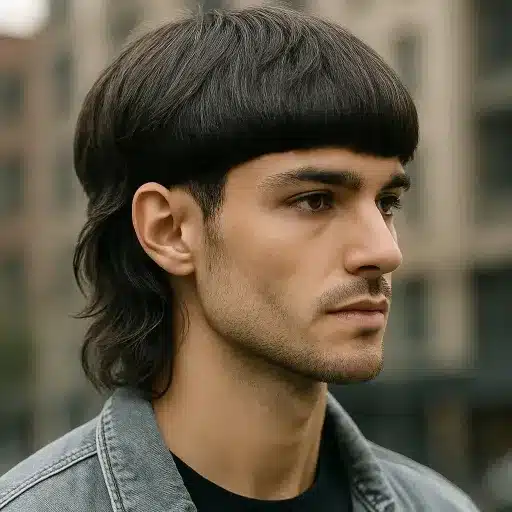
Fade vs. Taper: Clearing Up the Salon Confusion
If I had a dollar for every time a client sat in my chair and asked for a “fade” while pointing at a picture of a classic taper, I’d probably be retired on a beach by now. The two terms are tossed around like synonyms, but in the barbering world, they’re miles apart.
Is it a fade or just a really clean taper?

The shortest way to explain it? A taper changes the hair length gradually, but it keeps the natural hairline intact around your ears and at the nape of the neck. It’s conservative. It’s “safe” for the office.
A fade, however, is much more aggressive. In a true fade, the hair blends down into the skin, meaning your natural hairline actually disappears into the scalp. Last week, I had a guy come in wanting a “Low Taper” but he also wanted his neck shaved to the skin. I had to stop him right there—buddy, that’s a skin fade. If the line is gone, it’s a fade. Simple as that.
The Skin-Exposure Scale: Why 2026 is moving toward bolder transitions
We’re seeing a massive shift this year toward what I call “High-Contrast Living.” In 2024 and 2025, everyone wanted those soft, blurry transitions, but 2026 is all about the bold skin-exposure.
I’d say about 75% of my younger clients are now pushing for the “Bald Fade” or a “Zero Fade” that starts much higher up the temple. Why the change? It’s about that sharp, architectural look that defines the jawline. Still, you have to be careful. A high skin fade exposes every bump and ridge on your skull.
I usually tell people that if you’re not ready to see your barber every 10 to 12 days, a high-exposure fade will look “dusty” real fast. A taper is much more forgiving with regrowth, but if you want that crisp, 2026 edge, you have to embrace the skin. It’s a commitment, almost like a gym routine for your head.
High, Mid, or Low? Finding Your Fade Height
Deciding where your fade starts is more than a stylistic choice; it’s a strategy for your face shape and your calendar. Most guys pick a height based on a photo they saw on Instagram, but once the clippers start buzzing, the reality of upkeep sets in.
Low Fade: The Subtle Power Player for Professional Men

The low fade is the ultimate “low-risk, high-reward” move. It starts just above the ears and stays tight around the neckline, making it the preferred choice for my corporate clients who need to look sharp without screaming for attention.
What I love about a low fade is how it handles the “awkward phase.” Since the blend happens so close to the natural hairline, it still looks decent even after 3 weeks. I recently had a client, a lawyer who can only get in every 25 days or so, and we stuck to a low skin fade. By week three, it just looked like a clean taper rather than a messy, overgrown disaster. It’s subtle, it frames the beard perfectly, and it doesn’t expose too much scalp if you’re worried about that sort of thing.
High Fade vs Mid Fade: The Brutal Truth about Maintenance and Regrowth
If the low fade is a gentle slope, the high fade is a cliff. A high fade starts way up at the temples, creating a massive amount of contrast. It’s incredibly striking—for about 48 hours.
Here is the cold, hard truth: a high skin fade has a “shelf life” of maybe 10 days before the stubble starts to ruin the silhouette. I’ve seen guys spend upwards of $800 a year just on mid-month touch-ups because that transition is so sensitive to growth.
The mid fade is the middle ground, usually starting right at the temple or slightly above the eyebrow line. It’s probably the most versatile cut in 2026. But even with a mid-height, if your hair grows fast—like the roughly 0.44mm per day average—you’ll notice the “blur” disappearing by day seven. Still, the mid fade offers a balanced weight distribution. It squares off the head shape better than a high fade, which can sometimes make your head look like an egg if your barber isn’t careful with the blending.
Choosing your drop: The architectural curve of a modern fade
Lately, I’ve been steering more people toward the “Drop Fade” variation. Instead of a straight line around the head, the fade “drops” behind the ear to follow the natural bone structure of the skull.
It’s a more anatomical approach. Why fight the shape of your head? By dropping the fade at the back, you leave a bit more density at the crown, which is a lifesaver for guys who have a flat occipital bone (that bump at the back of your head). It adds a layer of sophistication that a standard circular fade lacks.
When you’re sitting in that chair, don’t just ask for a “Mid Fade.” Tell your barber you want it to drop at the nape. It’s a small tweak that makes a $30 haircut look like a $100 service.
Designing for Texture: Fade Trends for Black Men in 2026
Textured hair is where the true artistry of a fade reveals itself. In 2026, we aren’t just cutting hair; we’re sculpting profiles that honor natural growth patterns while hitting that sharp, high-definition aesthetic.
The 2026 Heritage Look: Waves and Sharp Contours
I’ve spent the last 15 years behind the chair, and I can tell you that the 2026 “Heritage Look” is a massive vibe shift. It combines the raw texture of a low-taper with the aggressive precision of a mid-skin fade.
The goal here is a silhouette that looks expensive. We’re seeing a lot of guys leaning into “shadow shading”—where the transition from hair to skin is so buttery it looks photoshopped, but the natural curl remains the star. I recently had a client who wanted to keep his top length at exactly 1.5 inches but wanted a “dead-sharp” drop fade around the back. By using a staggered guard system (jumping from a #0 to a #1.5 without the usual stop at #1), we created a high-contrast look that literally turned heads in the shop. It’s that crispness against the scalp that makes the texture pop.
Master Class: Precision Line-ups and Temple Fades for Textured Hair
A fade is only as good as its edges. Period. If your barber misses the line-up, the whole fade feels unfinished.
For textured hair, the temple area is high-stakes territory. I always start with a dry-shave line-up to see how the hair naturally falls before applying any enhancements. In 2026, the trend is moving away from those “painted on” spray-on hairlines. People want realism.
We’re using 0.1mm trimmers to etch out the C-curve. It’s a game of millimeters. One wrong flick of the wrist and you’ve pushed a hairline back two weeks. I tell my apprentices: “Focus on the corners, but leave the soul of the hairline alone.”
Skin Fades and 360 Waves: A Match Made in Barber Heaven

There is a specific geometry to pairing a skin fade with 360 waves. If the fade is too high, it cuts into the wave pattern; too low, and it doesn’t provide enough contrast to make the ripples stand out.
The “sweet spot” is usually a mid-drop fade. This allows the waves to wrap around the crown while the skin-tight blend starts just above the ear. It’s like a frame for a masterpiece.
I’ve noticed that about 85% of my “waver” clients are now asking for a slight taper at the front temples to keep the connection looking thick. It creates a seamless flow from the forehead into the deep ripples on top. Just remember: waves require compression, so after your fade, don’t forget the durag.
Dealing with scalp sensitivity after a close skin fade
Let’s be real—going down to the grain with a foil shaver can be brutal on the skin. I see a lot of “razor bumps” or pseudofolliculitis barbae when guys try to maintain a high-contrast look at home.
If your scalp looks like a strawberry field after a fresh cut, you’re doing it wrong. I always finish with a cold towel and a tea-tree infused tonic.
But for the guys with super sensitive skin? Maybe swap that “Bald Fade” for a “0.5 Fade.” It’s a 0.5mm difference, but your skin will thank you by not breaking out into a rash by Tuesday morning. Using a quality pre-shave oil before the clippers even touch your skin is a pro move that most people ignore.
The Burst Fade: Not Just for Athletes Anymore
The burst fade used to be localized almost entirely to the football field or high-intensity gyms, but that’s ancient history now. In 2026, it has successfully transitioned into a lifestyle choice for guys who want a silhouette that screams movement without the rigid lines of a standard fade.
Why curly hair thrives with a Burst Fade silhouette

Curly hair and the burst fade are a match made in heaven. Why? Because most curly-haired guys struggle with “the mushroom effect”—where the sides poof out and ruin the head shape.
By curving the fade specifically around the ear, you’re removing the bulk exactly where the hair tends to get widest. I’ve found that leaving about 2 to 3 inches of natural coil on top while tapering the “burst” area down to a skin-tight finish creates a localized explosion of texture. It keeps the focus on the curls while giving the neck and ears some breathing room. I recently had a client with Type 3C curls who was tired of the maintenance of a full taper; we switched him to a mid-burst, and the relief on his face when he realized his morning routine dropped by nearly 10 minutes was priceless.
5 Fresh Ways to Pair a Burst Fade with a Mohawk or Mullet
The versatility of the “burst” technique is what keeps it relevant this season. It’s not a one-size-fits-all cut.
-
The Modern Mullet-Burst: This is probably my favorite. You keep the length in the back but use the burst to clean up the sides completely. It eliminates that “Joe Dirt” vibe and makes the mullet look intentional.
-
The Coiled Mohawk: Instead of a stiff, gelled-up hawk, let your natural texture stand tall in a 4-inch wide strip down the center.
-
Low-Burst with Design: Keep the fade small and tight around the ear, but use that extra “canvas” to etch in a single lightning bolt or surgical line.
-
The “South of France” Fade: Made famous years ago but revived in 2026 with softer transitions and less “cliff-like” edges.
-
Braided Burst: If you have braids or twists, a burst fade around the temples adds a level of sharpness that makes the protective style look much fresher.
Still, you have to watch out for the growth. Because the burst area is so small—usually about the size of a tennis ball—the regrowth shows up fast. If you’re okay with a quick “touch-up” visit every 14 days, the aesthetic payoff is massive.
Face Shapes and Fade Logic: What Your Barber Won’t Tell You
The haircut you picked from a magazine might be a masterpiece, but if it doesn’t vibe with your skull’s geometry, it’s just a costly mistake. Most guys don’t realize that a fade is essentially a tool for facial re-sculpting—it’s about moving weight to where you need it most.
Round Faces: Using High Fades to Create Instant Bone Structure

If your face is on the rounder side, you need verticality. I always steer my round-faced clients toward a high skin fade because it elongates the head. By taking the hair down to the grain starting way up at the temples, you’re stripping away the horizontal bulk that makes a face look wider.
I’ve seen this transform guys. Last month, a regular came in feeling “soft” in the jaw; we took his sides up to a high #0 and left about 2.7 inches of height on top. Suddenly, his cheekbones actually existed again. It’s an optical illusion, sure, but a powerful one. You’re basically building a new silhouette from scratch. Just stay away from a low taper here—it adds width exactly where you’re trying to hide it.
Squaring off the jaw with a strategic Mid Fade
The mid fade is the “goldilocks” zone for men with oval or heart-shaped faces. It creates a square corner at the parietal ridge—that spot where your head starts to curve toward the top. This corner is the secret to a masculine look.
When I’m blending a mid fade, I keep the transition sharp right above the ears. It creates a visual line that pulls the eye down toward the jaw. Most barbers will just follow the head shape, which is a rookie move. Instead, I “block out” the sides to compensate for any natural roundness. It’s like wearing a tailored suit for your head. If the blend is too soft, you lose that “rugged” edge that 2026 styles are known for.
Can a Fade fix a receding hairline?
The short answer? Yes, but you have to be smart about it. When the corners start to push back, most guys try to hide it by growing the hair longer. Bad move. That just creates a “patchy” contrast that draws more attention to the thinning.
I usually recommend a high-and-tight fade for my guys dealing with a maturing hairline. By blurring the sides into the skin, you reduce the contrast between your “hair” and your “skin.” It makes the receding parts look like a deliberate part of the style rather than an accident of nature. I once worked with a guy who was at a Norwood 3 stage; we gave him a crisp mid-skin fade and a short buzz on top. He told me it was the first time in 4 years he didn’t feel like he was “hiding” something under a hat.
Don’t fight the hairline. Just change the frame around it.
2026 Styling Kit: Products That Actually Hold
A fresh cut is only half the battle; the rest is won in your bathroom mirror. In 2026, the era of the “rock-hard” hair helmet is officially dead, replaced by styles that move with you but stay in shape.
The Death of Gel: Why Matte Clays and Texturizing Powders Rule the Year
I haven’t touched a tub of high-shine gel in my shop for nearly 14 months. It’s too stiff. Instead, everyone is obsessed with matte clays and those tiny bottles of texturizing powder.
These powders act like microscopic “scaffolding” for your hair. They provide a massive amount of volume without that greasy feeling that ruins a clean fade. I remember a client who complained his hair always went flat by 2 PM. We switched him to a kaolin-based clay—just a pea-sized amount—and it held up through a humid subway commute and an 8-hour shift. If you’re rocking a taper or a textured top, you want the hair to look like it’s defying gravity on its own, not because it’s glued together.
3 Minutes to Perfection: The Daily Grooming Routine
You don’t need twenty minutes to look like you just left the barber. Most of my regulars have their routine down to about 180 seconds flat.
Start with damp hair—not soaking wet. Use a blow dryer on high heat to “train” the direction of your fade or top length. This is the step most guys skip, but it’s 90% of the work. Once the shape is set, emulsify a tiny bit of product in your palms until it disappears. Run it through the roots first, then style the tips.
If you’re using powder, just a few shakes at the crown and a quick “scrunch” with your fingers will give you that messy, intentional 2026 look. It’s supposed to be effortless. If it looks like you tried too hard, you probably did.

Summary: The Future of the Fade
The fade isn’t going anywhere; it’s just becoming more anatomical. We’ve moved past the “one-size-fits-all” clippers and into an age where your head shape, hair density, and even your job dictate the blend.
Whether you opt for a conservative taper or an aggressive high skin fade, the goal is intentionality. A good haircut is the best accessory you can own. It changes how you carry yourself. I’ve seen guys walk in slumped over and walk out standing two inches taller just because their neckline was finally crisp.
As we move deeper into 2026, expect to see even more focus on “hybrid” styles—merging the soft edges of a classic scissor cut with the lethal precision of a zero-gap trimmer. Don’t be afraid to experiment. Hair grows back, but a boring style is a wasted opportunity. Find a barber who talks more about your face shape than the guard number they’re using.